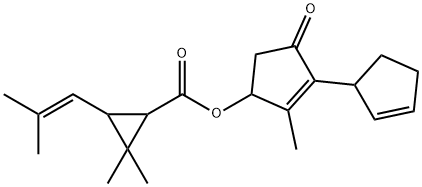
Cyclethrin is a pyrethroid insecticide. Little data has been published on its environmental fate, ecotoxicology or its impact on human health.
Insecticide for flies, roaches, and grain pests.
The production of cyclethrin involves a multi-step organic synthesis centred around esterification and cyclopropane ring formation. The process begins with the preparation of a cyclopentenone derivative, which is then functionalised to introduce a cyclopent-2-en-1-yl group. Separately, a cyclopropane carboxylic acid derivative, typically bearing a 2-methylprop-1-enyl side chain, is synthesised, often using diazo compounds or Simmons–Smith-type reactions to construct the strained ring. These two key intermediates are then coupled via esterification, forming the final molecule.
Contact and stomach action. Sodium channel modulator.
Moderately toxic by ingestion. When heated to decomposition it emits acrid smoke and irritating fumes. See also other pyrethrin entries.
Insecticide; Veterinary substance