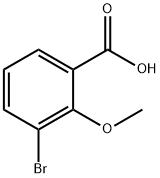
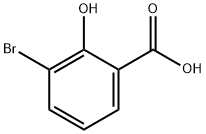
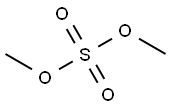
General procedure for the synthesis of 3-bromo-2-methoxybenzoic acid from 3-bromo-2-hydroxybenzoic acid (360 g, 1.65 mol) and dimethyl sulfate (443 g, 3.50 mol): 3-bromo-2-hydroxybenzoic acid was added to a reaction vessel and acetone (1.8 L) was added as a solvent. Subsequently, anhydrous potassium carbonate (552 g, 4.0 mol) was added to the reaction system and dimethyl sulfate was added slowly and dropwise. The reaction mixture was carried out under reflux conditions until thin layer chromatography (TLC) showed the disappearance of the raw material. After completion of the reaction, the solid phase was washed with acetone, the organic phases were combined and concentrated. The concentrate was diluted with ethyl acetate, washed sequentially with water and saturated brine and finally dried with anhydrous sodium sulfate. The dried organic phase was filtered and concentrated to afford the target product 3-bromo-2-methoxybenzoic acid (355 g, 94% yield), which can be used directly in the next step of the reaction.