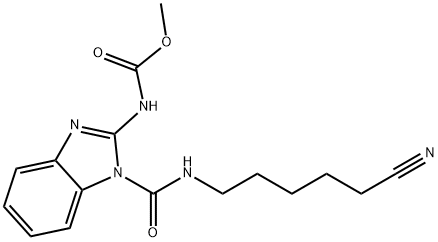
Cypendazole is an obsolete fungicide. Little data is available regarding its environmental fate, ecotoxicology or impact on human health.
Cypendazole would have been manufactured using the same industrial chemical processes applied to other benzimidazole carbamates such as carbendazim and benomyl. Commercial production began with synthesis of the benzimidazole core, followed by introduction of the carbamoyl and cyanopentyl substituents that define cypendazole’s structure. This typically involved reacting the benzimidazole intermediate with a methylcarbamoyl chloride or equivalent carbamoylating agent under controlled, anhydrous conditions, and separately preparing the 5 cyanopentylamine side chain. These components were then coupled through a nucleophilic substitution step to form the fully substituted benzimidazole carbamate. After reaction completion, the mixture underwent aqueous neutralisation, filtration, solvent exchange, and crystallisation, yielding technical grade cypendazole.
ChEBI: Cypendazole is a benzimidazole fungicide and a benzimidazolylcarbamate fungicide.
Systemic, broad-spectrum action. Benzimidazole fungicides work by inhibiting β-tubulin polymerization, which disrupts the formation of the mitotic spindle during fungal cell division