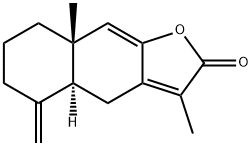
Atractylenolide I is a sesquiterpene that has been found in the rhizomes of A. macrocephala and has diverse biological activities, including anti-inflammatory, anti-angiogenic, anti-tumor, and antidepressant properties. It inhibits LPS-induced increases in TNF-α and nitric oxide (NO) production, as well as inducible nitric oxide synthase (iNOS) activity, in murine peritoneal macrophages (IC50s = 23.1, 41, and 67.3 μM, respectively). Atractylenolide I reduces pouch fluid weight, inflammatory cell count, granuloma weight, and vascular index (ID50s = 24.18, 19.46, 14.44, and 15.15 mg/kg, respectively) in a mouse air pouch granuloma model induced by Freund''s complete adjuvant (FCA). It also reduces the number of microvessels in the air pouch wall by 58.27% when administered at a dose of 20 mg/kg and reduces the blood levels of TNF-α, IL-1β, IL-6, VEGF, placenta growth factor (PlGF), and bFGF in a dose-dependent manner in a mouse model of FCA-induced granuloma. Atractylenolide I inhibits the growth of T-24, 5637, RT4, and 253J bladder cancer cells in vitro (IC50s = 12.8-63.7 μM) and reduces tumor growth in T-24 and 253J mouse xenograft models in a dose-dependent manner. In a mouse model of depression induced by chronic unpredictable mild stress, atractylenolide I reverses stress-induced decreases in hippocampal levels of serotonin (5-HT; ) and norepinephrine and reduces immobility time in the forced swim and tail suspension tests in a dose-dependent manner, indicating antidepressant-like activity.
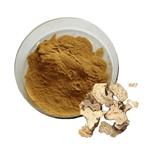
Off-white crystalline powder, soluble in organic solvents such as methanol, ethanol, and DMSO, derived from Atractylodes macrocephala Koidz.
Atractylenolide I (Standard) is the analytical standard of Atractylenolide I. This product is intended for research and analytical applications. Atractylenolide I is a sesquiterpene derived from the rhizome of Atractylodes macrocephala, possesses diverse bioactivities, such as neuroprotective, anti-allergic, anti-inflammatory and anticancer properties. Atractylenolide I reduces protein levels of phosphorylated JAK2 and STAT3 in A375 cells, and acts as a TLR4-antagonizing agent.
[1] CUI-QIN LI Ju Q J Lang Chong He. Atractylenolide I and atractylenolide III inhibit Lipopolysaccharide-induced TNF-alpha and NO production in macrophages.[J]. Phytotherapy Research, 2007, 21 4: 347-353. DOI:
10.1002/ptr.2040[2] CHANGHE WANG Langchong H Haijie Duan. Inhibitory effect of atractylenolide I on angiogenesis in chronic inflammation in vivo and in vitro[J]. European journal of pharmacology, 2009, 612 1: Pages 143-152. DOI:
10.1016/j.ejphar.2009.04.001[3] RUI YU. Anti-tumor effects of Atractylenolide I on bladder cancer cells[J]. Journal of Experimental & Clinical Cancer Research, 2016, 110 1. DOI:
10.1186/s13046-016-0312-4[4] HAIYAN GAO. Anti-depressant-like effect of atractylenolide I in a mouse model of depression induced by chronic unpredictable mild stress.[J]. Experimental and therapeutic medicine, 2018: 1574-1579. DOI:
10.3892/etm.2017.5517