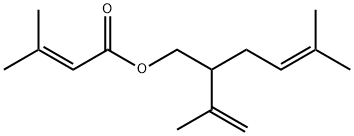
Lavandulyl senecioate is produced commercially through a straightforward esterification process rather than a multi-step pesticide specific synthesis. Manufacturers begin with two naturally occurring or commodity-grade components: lavandulol, a monoterpenoid alcohol derived from lavender-type essential oils or synthetic terpene chemistry, and senecioic acid, typically sourced from established carboxylic-acid production routes. These two components are condensed under standard esterification conditions, acid catalysis, removal of water, and controlled temperature, to form the lavandulyl senecioate ester. The crude ester is then purified by distillation or solvent washing, yielding a technical-grade product.