Soluble in methanol, slightly soluble in boiling water, hot ethanol, ether and glacial acetic acid, soluble in dilute alkali. Sources from the plant "Sacred Herb" in the family of Linum usitatissimum
Eriodictyol is used in biological studies as natural compounds as sources of new bifunctional scaffolds targeting cholinesterases and beta amyloid aggregation. Eriodictyl is extracted from Yerba santa, an herb. The leaf is used to make medicine.Yerba santa is used for respiratory conditions including coughs, colds, tuberculosis, asthma, and chronic bronchitis. It is also used for fever and dry mouth. Some people use it to relieve muscle spasms, to loosen phlegm, and as a tonic.
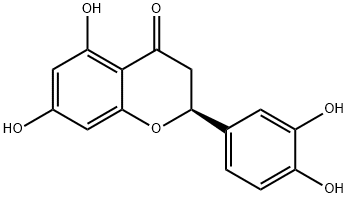
ChEBI: A tetrahydroxyflavanone that is flavanone substituted by hydroxy groups at positions 5, 7, 3' and 4' respectively.
The flavanone eriodictyol is a metabolite in the flavonoid biosynthesis pathway. Eriodictyol has anti-inflammatory and antioxidant activities and taste-modifying properties; it is extracted from plants such as Eriodictyon californicum, the twigs of Millettia duchesnei, in Eupatorium arnottianum, lemons and as glycoside in rose hips (Rosa canina).
Eriodictyol shows protective effect against LPS-induced acute lung injury (ALI). Eriodictyol (30 mg/kg, p.o.) decreases the production of inflammatory cytokines, elevates survival rate, and decreases oxidative stress levels in LPS-induced ALI mice. Eriodictyol inhibits MPO activity and inflammatory neutrophil accumulation in the lung tissues. Eriodictyol treatment also enhances Trx1 expression by upregulating the Nrf2 expression in lung tissues[1].