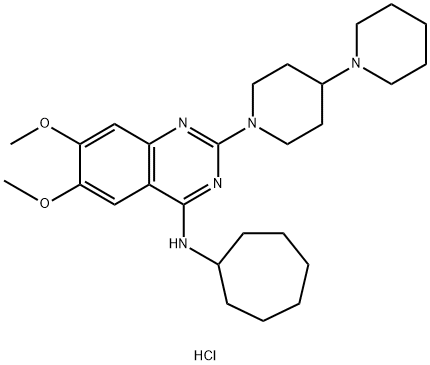
Chemokine (C-C motif) receptor 4 (CCR4) antagonist is an antagonist of CCR4.
1 It inhibits activation of CCR4 by chemokine (C-C motif) ligand 22 (CCL22) in a [
35S]GTPγS assay and also inhibits chemotaxis in human and mouse CCR4-expressing B300-19 cells (IC
50s = 18, 140, and 39 nM, respectively). CCR4 antagonist inhibits microglial activation in the cortex in a mouse model of hepatic encephalopathy induced by the neurotoxin azoxymethane when administered at a dose of 1 mg/kg per day.
2 It reduces azoxymethane-induced increases in
Il6 and
Il1b expression in mouse cortex. CCR4 antagonist reduces mechanical and thermal sensitivity in a mouse model of type I diabetes induced by streptozotocin when administered intrathecally at doses ranging from 10 to 30 μg/animal.
3
C-021 dihydrochloride is a potent CC chemokine receptor-4 (CCR4) antagonist. C-021 dihydrochloride potently inhibits functional chemotaxis in human and mouse with IC50s of 140 nM and 39 nM, respectively. C-021 dihydrochloride effectively prevents human CCL22-derived [35S]GTPγS from binding to the receptor with an IC50 of 18 nM[1].
1. Yokoyama, K., Ishikawa, N., Igarashi, S., et al. Discovery of potent CCR4 antagonists: Synthesis and structure-activity relationship study of 2,4-diaminoquinazolines Bioorg. Med. Chem. 16(14),7021-7032(2008).
2. McMillin, M., Frampton, G., Thompson, M., et al. Neuronal CCL2 is upregulated during hepatic encephalopathy and contributes to microglia activation and neurological decline J. Neuroinflammation 11,121(2014).
3. Bogacka, J., Ciapaa, K., Pawlik, K., et al. Blockade of CCR4 diminishes hypersensitivity and enhances opioid analgesia - Evidence from a mouse model of diabetic neuropathy Neuroscience 441,77-92(2020).