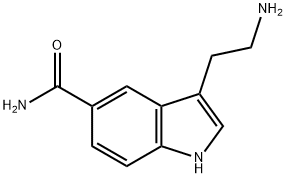
5-Carboxamidotryptamine (0.03-3 mg/kg i.p. and 0.125-5 μg i.c.v.) causes a dose-dependent reduction in rectal temperature of mice[3].
5-Carboxamidotryptamine (0.1-1 mg/kg; i.p.) reduces rectal temperature in wild type mice but not 5-HT7 receptor knockout mice[3].
5-Carboxamidotryptamine (0.0 1-1 μg/kg; i.v.) causes consistent, dose-related decreases in diastolic blood pressure and carotid arterial vascular resistance and increases in heart rate of cats. In contrast, 5-HT (1-100 μg/kg; i.v.) causes tachycardia but variable and complex effects on diastolic blood pressure and carotid arterial vascular resistance[5].
5-Carboxamidotryptamine does not cause bronchoconstriction in cats. In contrast, 5-HT causes dose-related bronchoconstriction[5].
| Animal Model: | Male Swiss Webster mice (20-25 g)[3] |
| Dosage: | 0.03-3 mg/kg (i.p.) and 0.125-5 μg (i.c.v.) |
| Administration: | i.p. and i.c.v. |
| Result: | Caused dose-dependent reduction in rectal temperature. |
| Animal Model: | 5-HT7 receptor knockout mice (background=50% 129SvEv/50% C57Bl/6J)[3] |
| Dosage: | 0.1-1 mg/kg |
| Administration: | i.p. and i.c.v. |
| Result: | Reduced rectal temperature in wild type but not 5-HT7 receptor knockout mice. |