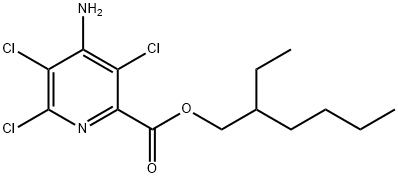
Picloram-etexyl is produced through an esterification-centred industrial process that begins with preparation and purification of picloram acid, typically obtained through the established chlorinated-pyridine synthesis route used across the picolinic acid herbicide family. The acid is then transformed into an activated carboxyl derivative, most commonly an acid chloride, under controlled conditions that prevent decomposition of the highly chlorinated heterocycle. This activated intermediate is reacted with 2 ethylhexanol (the “etexyl” alcohol) to form the ester, with solvent choice, catalysts, and temperature carefully managed to drive the reaction to completion while avoiding side reactions such as transesterification or hydrolysis.