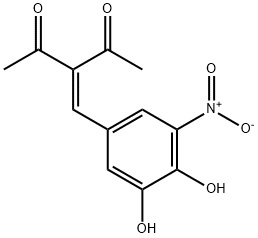
Nitecapone (OR-462) is a drug which acts as a selective inhibitor of the enzyme catechol O-methyl transferase (COMT).It was patented as an antiparkinson medication.
Nitecapone (1-100 μM) reducesd GSH (reduced glutathione) depletion induced by ROO-by 11-38% and oxidation to oxidized glutathione (GSSG) by 32-45%.MCE has not independently confirmed the accuracy of these methods. They are for reference only.
Nitecapone (OR-462) is a short-acting, orally active, catechol-O-methyltransferase (COMT) inhibitor with gastrointestinal protective and antioxidant activity. Nitecapone (OR-462) scavenges reactive oxygen species and nitric oxide and prevents lipid peroxidation.
Inhibitor for the treatment of Parkinson disease
Inhibitor for the treatment of Parkinson's disease.
ChEBI: Nitecapone is a hydroxycinnamic acid.
Nitecapone is a short-acting inhibitor of catechol-O-methyltransferase (COMT). Nitecapone displays in vivo activity in peripheral tissues, but does not pentrate the blood brain barrier. The compound increases mechanical and thermal nociception, and reduces neuropathic pain in diabetic rats and in a spinal nerve ligation model.
Nitecapone (30 mg/kg, ip daily for 13 days) reduces development and symptoms of neuropathic pain after spinal nerve ligation in rats[3].
| Animal Model: | Eighty-six male Wistar rats, weighing 140-350 g[3]. |
| Dosage: | 30 mg/kg (3.3 mL/kg). |
| Administration: | IP, once daily for 13 days. |
| Result: | Selectively and specifically inhibits COMT in the peripheral tissues, and to some extent in the CNS for ca. 3 h.
Increased the thresholds for the mechanical stimuli and thus reduced mechanical allodynia.
Reduced the number of positive reactions of the ipsilateral paws when compared with the baselines in the nitecapone-pretreated rats.
|