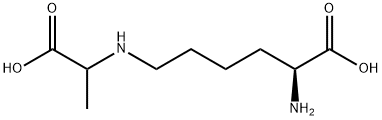
[1] M U AHMED. N-epsilon-(carboxyethyl)lysine, a product of the chemical modification of proteins by methylglyoxal, increases with age in human lens proteins.[J]. Biochemical Journal, 1997, 324 ( Pt 2): 565-570. DOI:
10.1042/bj3240565[2] JING XUE. The Receptor for Advanced Glycation End Products (RAGE) Specifically Recognizes Methylglyoxal-Derived AGEs[J]. Biochemistry Biochemistry, 2014, 53 20: 3327-3335. DOI:
10.1021/bi500046t[3] ZEHRA HASHIM Shamshad Z. Advanced glycation end products in diabetic and non-diabetic human subjects suffering from cataract.[J]. AGE, 2011: 377-384. DOI:
10.1007/s11357-010-9177-1[4] G. JANSEN J K P Hollman. Aging increases Nepsilon-(carboxymethyl)lysine and caloric restriction decreases Nepsilon-(carboxyethyl)lysine and Nepsilon-(malondialdehyde)lysine in rat heart mitochondrial proteins.[J]. Free Radical Research, 1900, 90 1: 47-54. DOI:
10.1080/10715760210165[5] FERNANDA HANSEN. Methylglyoxal and carboxyethyllysine reduce glutamate uptake and S100B secretion in the hippocampus independently of RAGE activation[J]. Amino Acids, 2015, 48 2: 375-385. DOI:
10.1007/s00726-015-2091-1