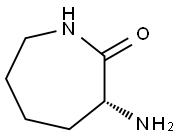
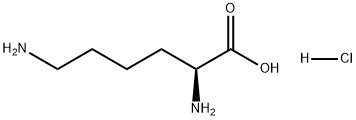
General procedure for the synthesis of (R)-3-amino-2-caprolactam from L-lysine hydrochloride: 30 g (164 mmol) of L-lysine hydrochloride and 150 mL of 1,2-propanediol as a solvent were added to a 250 mL three-neck flask. Under stirring conditions, 6.57 g of sodium hydroxide was slowly added with continuous stirring until complete dissolution. Subsequently, the reaction mixture was heated to reflux and the reflux reaction was maintained for 5 hours, during which time the water generated was removed by means of a water separator and the progress of the reaction was monitored by thin-layer chromatography (TLC) until the reaction was complete. Upon completion of the reaction, the mixture was cooled to room temperature and the by-product sodium chloride was removed by filtration. The filtrate was acidified dropwise by adding 6 mol/L aqueous hydrochloric acid to the filtrate, followed by a back-extraction operation. The aqueous phase was collected, dried over anhydrous sodium sulfate, and recrystallized by adding appropriate amount of ethanol to finally obtain 21.9 g of white solid product (R)-α-amino caprolactam in 81% yield.