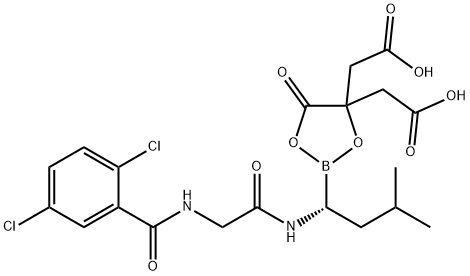
Ixazomib Citrate is a reversible boronic acid proteasome inhibitor.
ChEBI: A glycine derivative that is the amide obtained by formal condensation of the carboxy group of N-(2,5-dichlorobenzoyl)glycine with the amino group of 2,2'-{2-[(1R)-1-amino-3-methylbutyl]-5-oxo-1,3,2-dioxaborolane-4,4-diy
}diacetic acid. A prodrug for ixazomib that is used in combination therapy for treatment of multiple myeloma.
Ixazomib citrate is an N-capped dipeptidyl leucine boronic acid like bortezomib, and it is able to inhibit the chymotrypsin-like proteolytic site of the 20S proteasome.
Common side effects of Ixazomib citrate include diarrhea, constipation and low platelet count. Like the older bortezomib (which can only be given by injection), it acts as a proteasome inhibitor, has orphan drug status in the US and Europe, and is a boronic acid derivative.
Ixazomib citrate (MLN9708; 11 mg/kg) significantly inhibits MM tumor growth and prolongs survival in the human plasmacytoma MM.1S xenograft mouse model. The blood chemistry profiles of Ixazomib-treated mice show normal levels of creatinine, hemoglobin, and bilirubin. Ixazomib dramatically increases the number of cleaved-caspase-3 positive cells of the xenograft model[2].