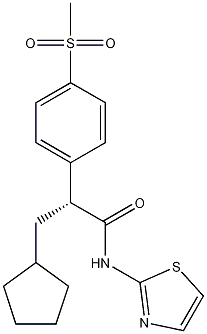
A cell-permeable thiazolyl-propanamide compound that acts as an allosteric glucokinase-(GK) selective activator, increasing Vmax and decreasing [S]1/2 (by 1.5- and 4.3-fold, respectively, at 3 µM; [Glucose] = 5 mM) in human GK enzymatic assays, as well as freeing GK from the inhibitory action of GK regulatory protein (GKRP), resulting in increased GK nuclear-to-cytosol translocation in primary rat hepatocytes (EC50/[Glucose] = 0.16 µM/16.8 mM, 0.27 µM/8.4 mM, 2.2 µM/2.8 mM) and reduced glucose concentration for stimulating insulin secretion from isolated rat pancreatic islets (threshold [glucose] = 3 mM vs 6 mM with or without 3 µM Ro-28-1675). Exhibits in vivo glucose-lowering and insulin-releasing activity in non-diabetic C57BL/6 mice and Wistar rats and is efficacious in several murine (KK/Upj-Ay/J, ob/ob, and diet-induced obese C57BL/6) and rodent (Goto-Kakizaki) type II diabetes mellitus (T2DM) models (10 to 50 mg/kg via p.o.), while efficacy is no longer observed in older hypoinsulinemic db/db mice with blood glucose levels reaching 300 mg/dl. Reported not to affect the activity of hexokinase I or II and display no activity toward GK-independent insulin release from β cells upon 2-Ketoisocaproic acid (α-KIC) stimulation.