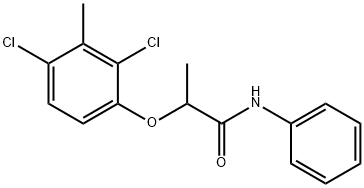
Clomeprop is an obsolete rice herbicide. Little information on its environmental fate, ecotoxicology or effects on human health have been published.
Clomeprop can be used in agricultural use and biological study of method for controlling herbicide resistant or tolerant weeds.
The commercial production of clomeprop involves the synthesis of 2-(2,4-dichloro-3-methylphenoxy)-N-phenylpropanamide, achieved through etherification of a chlorinated phenol with a propanoic acid derivative, followed by amide bond formation with aniline. The process requires careful control of reaction conditions to ensure high purity and herbicidal efficacy.
Selective action. Synthetic auxin with action like indole acetic acid.