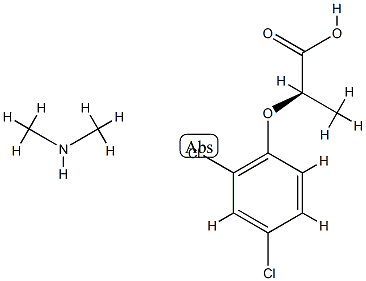
Dichlorprop-P-diethylammonium is produced using the same overarching industrial pattern applied to other amine-salt forms of phenoxypropionate herbicides: manufacturers first generate and purify the parent acid, dichlorprop-P, the resolved (R-enantiomer) form of dichlorprop, then convert it into the desired salt through a controlled neutralisation step. Upstream, dichlorprop-P acid is obtained by assembling and chlorinating the phenoxypropionate framework, followed by enantioselective synthesis or resolution to secure the R-isomer, and purification to technical grade. To form the diethylammonium salt, the acid is dissolved or slurried in an appropriate medium and treated with diethylamine at a defined pH and temperature, ensuring full salt formation without leaving excess free amine or unreacted acid.
Selective, systemic, absorbed through leaves and translocates to roots. Synthetic auxin causing stem and leaf malformations leading to death.