[1] BRIAN CLEM. Small-molecule inhibition of 6-phosphofructo-2-kinase activity suppresses glycolytic flux and tumor growth.[J]. Molecular Cancer Therapeutics, 2008: 110-120. DOI:
10.1158/1535-7163.mct-07-0482[2] BRIAN F CLEM. Targeting 6-phosphofructo-2-kinase (PFKFB3) as a therapeutic strategy against cancer.[J]. Molecular Cancer Therapeutics, 2013, 12 8: 1461-1470. DOI:
10.1158/1535-7163.mct-13-0097[3] MICHAEL A LEA Charles desBordes Mansour Altayyar. Inhibition of Growth of Bladder Cancer Cells by 3-(3-Pyridinyl)-1-(4-pyridinyl)-2-propen-1-one in Combination with Other Compounds Affecting Glucose Metabolism.[J]. Anticancer research, 2015: 5889-5899.
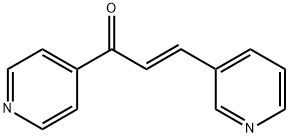
[4] MICHAEL A LEA Charles D Yolanda Guzman. Inhibition of Growth by Combined Treatment with Inhibitors of Lactate Dehydrogenase and either Phenformin or Inhibitors of 6-Phosphofructo-2-kinase/Fructose-2,6-bisphosphatase 3.[J]. Anticancer research, 2016, 36 4: 1479-1488.
[5] ALDEN C KLARER. Inhibition of 6-phosphofructo-2-kinase (PFKFB3) induces autophagy as a survival mechanism.[J]. Cancer & Metabolism, 2014, 2 1: 2. DOI:
10.1186/2049-3002-2-2[6] SANDRA SCHOORS. Partial and transient reduction of glycolysis by PFKFB3 blockade reduces pathological angiogenesis.[J]. Cell metabolism, 2014, 19 1: 37-48. DOI:
10.1016/j.cmet.2013.11.008