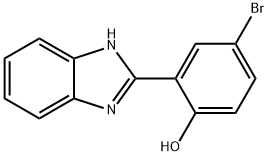
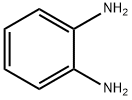
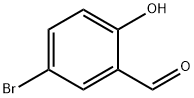
General method: 1,2-benzenediamine (0.54 g, 5.0 mmol) and 5-bromosalicylaldehyde (1.133 g, 7.5 mmol) were dissolved in tetrahydrofuran (10 mL) and A-FGO catalyst (0.1 g) was added. The mixture was heated to 50 °C and stirred for 2 h at room temperature. The reaction process was monitored by thin layer chromatography (TLC). Upon completion of the reaction, dichloromethane (10 mL) was added and stirring was continued for 15 minutes at room temperature. The catalyst was removed by filtration and washed with dichloromethane for subsequent use (reused up to 5 times). The crude product was purified by ethanol recrystallization to afford 2-(1H-benzimidazol-2-yl)-4-bromophenol (0.53 g, 98% yield). All the synthesized benzimidazole derivatives were fully characterized by conventional spectroscopic techniques.
[1] New Journal of Chemistry, 2018, vol. 42, # 22, p. 17931 - 17938
[2] Research on Chemical Intermediates, 2017, vol. 43, # 3, p. 1751 - 1766
[3] Applied Organometallic Chemistry, 2018, vol. 32, # 4,
[4] Journal of Organic Chemistry, 2013, vol. 78, # 22, p. 11184 - 11193
[5] Applied Organometallic Chemistry, 2018, vol. 32, # 10,