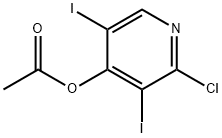
Cliodinate is an obsolete pyridine herbicide. The pesticide has not been extensively studied and so little information is available regarding its environmental fate, ecotoxicity or human health effects.
Commercial manufacture of cliodinate followed the classic processes used for low volume phosphorus esters in the 1970s–1980s. Production began with preparation of the dichloro substituted phenol intermediate, which was reacted with phosphorus oxychloride or a related phosphorus chloride reagent under controlled, anhydrous conditions to form the corresponding aryl phosphorochloridate. This intermediate was then subjected to alcoholysis with the required alkanol to generate the mixed phosphoric ester structure characteristic of cliodinate. Because these reactions release hydrogen chloride and are highly moisture sensitive, they were carried out in closed, solvent based batch reactors equipped with acid gas scrubbing and inert gas blanketing. After completion, the crude product was neutralised, washed, and purified by phase separation and solvent exchange, yielding a technical concentrate
Selective, systemic, absorbed through leaves and roots. Works by mimicking the natural plant hormone auxin (indole-3-acetic acid, IAA)