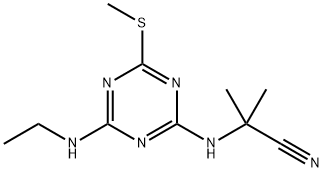
Cyanatryn would have been produced using the same industrial chemical processes applied to other chloro substituted triazines of its era. Commercial manufacture began with cyanuric chloride, the universal starting material for triazine herbicides, which was reacted stepwise with the specific alkylamine and cyano substituted amine components that define cyanatryn’s substitution pattern. Each amination step required strict temperature control because cyanuric chloride reacts exothermically and becomes progressively less reactive after each substitution. The partially substituted intermediates were kept under controlled pH and cooling to ensure selective formation of the desired mono and di substituted triazine before final substitution with the methylthio group characteristic of cyanatryn’s structure. After completion, the reaction mixture was neutralised, filtered, and subjected to solvent exchange and crystallisation to yield technical grade material.