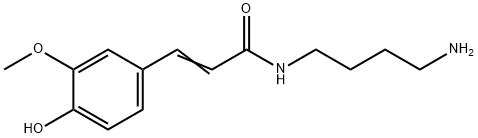
Salsola subaphylla contains this alkaloid which is extremely hygroscopic and for
which no definite melting point has been obtained. It gives crystalline salts and
derivatives, e.g. the hydrochloride, melting over a very wide range of temperature;
the hydriodide which behaves similarly to the hydrochloride, picrate, m.p.
218.5°C. On hydrogenation over Pt02 it yields the dihydro derivative giving a
hydrochloride, m.p. 139-140oC and a picrate, m.p. 174.6-175°C. When boiled
with 30 per cent KOH it forms putrescine and ferulic acid and has the probable
structure given above.
Feruloylputrescine is an effector of plant root systems, influencing development of nutrient gathering root systems. Inhibition of the formation of this compound causes the development of a dominant or ‘tap’ root.
ChEBI: Subaphyllin is a hydroxycinnamic acid.
Feruloylputrescine (administered via diet, 10 mg per g of diet daily for 6 weeks) significantly reduces TMA and TMAO levels in high-fat diet-induced mice[1].
| Animal Model: | High-fat diet-induced C57BL/6 mouse model[1] |
| Dosage: | 10 mg/g diet |
| Administration: | Administered via diet, 10 mg/g diet daily for 6 weeks |
| Result: | Significantly reduced TMA and TMAO levels. |
Ryabinin, Il'na., Dokl. Akad. Nauk SSSR, 67, 513 (1949)