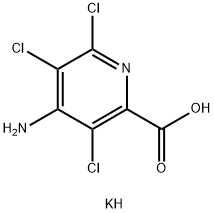
Picloram-potassium is produced through a straightforward neutralisation process that begins with preparation and purification of picloram acid via the established chlorinated-pyridine route characteristic of the picolinic acid herbicide family. The purified acid is then dissolved or suspended in water and treated with potassium hydroxide under controlled pH and temperature, ensuring complete salt formation while avoiding degradation of the chlorinated heterocycle. Once the neutralisation reaches the required stoichiometry, the resulting aqueous picloram-potassium solution is filtered to remove insoluble residues, adjusted for active-ingredient concentration, and standardised for pH, density, and clarity.