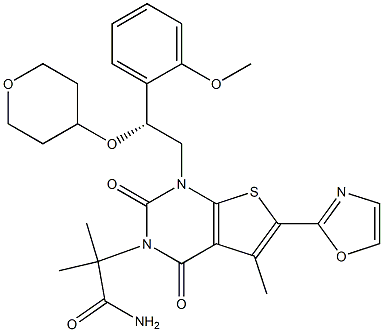
To explore the impact of chronic ND-646 treatment on NSCLC tumor growth and to determine the efficacy of twice-daily dosing, athymic nude mice bearing established A549 subcutaneous tumors are treated orally with either vehicle twice daily (BID), 25 mg/kg ND-646 once daily (QD), 25 mg/kg ND-646 BID or 50 mg/kg ND-646 QD for 31 days. ND-646 at 25 mg/kg QD is ineffective at inhibiting tumor growth. However, ND-646 administered at 25 mg/kg BID or 50 mg/kg QD significantly inhibits subcutaneous A549 tumor growth. ND-646 is well tolerated throughout the treatment period, with no significant weight loss occurring after chronic ND-646 dosing, suggesting that the maximum tolerated dose (MTD) has not been reached. Mice are sacrificed at 1 hr post final dose and tissues are either prepared for immunohistochemistry (IHC) or immunoblot analysis. Tumors treated with all doses of ND-646 have lost detection of P-ACC at 1 hr, demonstrating effective tumor penetration and acute ACC inhibition by ND-646. Notably, only at the doses of ND-646 that lead to significant tumor growth inhibition (25 mg/kg BID and 50 mg/kg QD) is significant elevation of P-EIF2αS51 expression observed in tumor lysates[1].