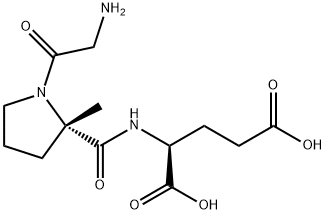
Trofinetide (NNZ-2566) suppresses penetrating ballistic-like brain injury (PBBI) induced inflammatory cell infiltration at 3 days following PBBI as compare to vehicle treatment. Trofinetide treatment significantly reduces the elevation of IL-6 (79%), E-selectin (81%), IL-1β (76%) and TNF-α (72%) mRNA levels in the injured hemisphere at 12 h post-PBBI, with maximal inhibition occurring between 12 h and 24 h. Trofinetide treatment does not affect the PBBI-induced up-regulation of IL-6 expression at any time point, but does produce significant reductions in the injury-induced up-regulation of IL-1β, INF-γ, and TNF-α expression. Trofinetide treatment suppresses IL-1β expression in the injured brain hemisphere for up to 7 days post-PBBI[1]. The high doses of Trofinetide (NNZ-2566) (10 and 100 mg/kg bolus followed by continuous infusion) attenuate non-convulsive seizure (NCS) occurring beyond 2 h after permanent middle cerebral artery occlusion (pMCAo). All doses of Trofinetide completely suppress the delayed occurrence of NCS as compare with the vehicle-treated animals[2].