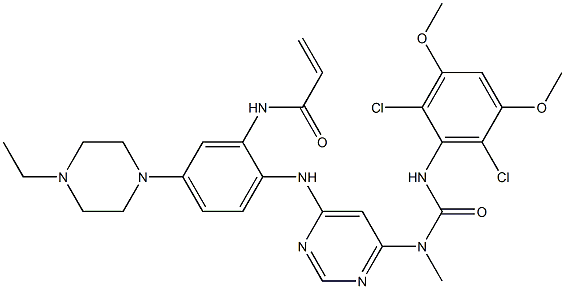
H3B-6527 is an orally active, highly selective and covalent FGFR4 inhibitor with an IC50 of <1.2 nM. H3B-6527 has at least 250-fold selectivity over FGFR1-3 with IC50s of 320 nM, 1290 nM and 1060 nM respectively. H3B-6527 has potent anti-cancer activity[1].
H3B-6527 is a highly selective covalent FGFR4 inhibitor with IC50 < 1.2 nM, with >250-fold selectivity for FGFR4 over FGFR1-3 (IC50s of 320, 1290 and 1290 for FGFR1-3, respectively) 1060 nM).
H3B-6527 has a strong inhibitory effect on FGFR4 with IC50 less than 1.2 nM. TAOK2, JNK2 and CSF1R were less sensitive to H3B-6527 treatment with IC50s of 690, >10000 and >10000 nmol/L, respectively. Treatment of Hep3B cells with H3B-6527 resulted in a concentration-dependent activation of caspase-3/7. It inhibits FGFR4 signaling, inhibits proliferation, and causes apoptosis in HCC cells.
In a mouse model of Hep3B hepatocarcinoma xenografts, H3B-6527 had dose-proportional plasma exposure (greater than tumor exposure; doses tested were 30, 100, and 300 mg/kg). The pharmacodynamic response of H3B-6527 was detected, and it was found that CYP7A1 mRNA and pERK1/2 protein levels showed a concentration-dependent response, and higher concentrations would lead to a more durable response. In both subcutaneous Hep3B xenograft models and orthotopic xenograft models, oral administration of it (twice a day) significantly inhibited the growth of xenografts. Palbociclib enhanced the potency of it and promoted tumor regression in the JHH-7 model, whereas it single-agent administration only caused tumor growth arrest.
FGFR4: <1.2 nM (IC50); FGFR1: 320 nM (IC50); FGFR2: 1290 nM (IC50); FGFR3: 1060 nM (IC50)
[1] Joshi JJ, et al. H3B-6527 Is a Potent and Selective Inhibitor of FGFR4 in FGF19-Driven HepatocellularCarcinoma. Cancer Res. 2017 Dec 15;77(24):6999-7013. DOI:
10.1158/0008-5472.CAN-17-1865