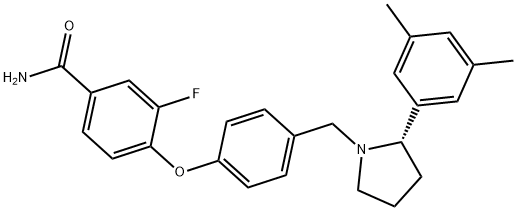
Aticaprant (CERC-501) has a rapid absorption (tmax=1-2 h) and good oral bioavailability (F=25%). Oral Aticaprant (CERC-501) administration selectively and potently occupies central kappa opioid receptors (ED50=0.33 mg/kg), without evidence of mu or delta receptor occupancy. LY2456302 potently blocks kappa-agonist-mediated analgesia and disruption of prepulse inhibition, without affecting mu-agonist-mediated effects at doses >30-fold higher. Aticaprant (CERC-501) produces antidepressant-like effects in the mouse forced swim test and enhances the effects of imipramine and citalopram. Aticaprant (CERC-501) reduces ethanol self-administration in alcohol-preferring rats[1]. Aticaprant (CERC-501) alleviates the nicotine withdrawal syndrome, as evidenced by decreased expression of nicotine withdrawal induced anxiety-related behavior, somatic signs, and CPA, and increased hotplate latency in nicotine withdrawn mice following pre-treatment[2].