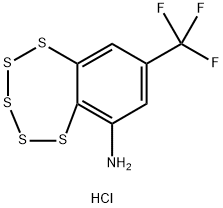
TC-2153 is a selective inhibitor of striatal-enriched protein tyrosine phosphatase (STEP), with psychotropic activity and low acute toxicity. TC-2153 increases the expression of brain-derived neurotropic factor (BDNF) in the brain. And it decreases MAOA and 5-HT1A receptors mRNA level in midbrain. TC-2153 also inhibits 5-HT2A receptor-mediated signaling[1].
TC-2153 is a potent inhibitor of STEP (STriatal-Enriched protein tyrosine Phosphatase) that forms a reversible covalent bond with the catalytic cysteine in STEP. TC-2153 increases tyrosine phosphorylation of STEP substrates ERK1/2, Pyk2, and GluN2B in cell cultures. TC-2153 improves cognitive function in transgenic AD mice.
Chronic TC-2153 treatment: TC-2153 (20 mg/kg; i.p.; once daily for 7 d) shows antidepressant-like effect without altering locomotor, exploratory activity and anxiety[1].
Acute TC-2153 treatment: TC-2153 (10 mg/kg and 20 mg/kg; p.o.; single dose) inhibits the functional activity of 5-HT2A receptors in vivo in mice[1].
| Animal Model: | SPF-state adult mouse males[1] |
| Dosage: | 10 mg/kg and 20 mg/kg; with or without 1 mg/kg DOI i.p. at 3 h after final treatment |
| Administration: | Oral gavage or intraperitoneal injection; single dose or once daily for 7 d |
| Result: | Showed antidepressant-like effect in the forced swim test without any adverse side effects on locomotor activity, anxiety, exploration, motor skill and obsessive-compulsive-like behavior.
Both acute and chronic methods inhibited the functional activity of 5-HT2A receptors. |
5-HT1A Receptor; 5-HT2A Receptor; MAO-A
[1] Walters JM, et al. Pharmacological inhibition of STriatal-Enriched protein tyrosine Phosphatase by TC-2153 reduces hippocampal excitability and seizure propensity. Epilepsia. 2022 May;63(5):1211-1224. DOI:
10.1111/epi.17192