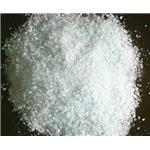
The product of high temperature calcination (above 450.degree.C (842.degree.F)) of naturally occurring kaolin, a hydrated aluminum silicate, resulting in the evolution of water and the formation of new substances depending upon the calcination temperatures employed.
The commercial production of calcined kaolin begins with the mining of high-purity kaolin. After extraction, the raw clay undergoes crushing, grinding, and purification to remove impurities and achieve a consistent particle size. The purified kaolin is then subjected to calcination, a thermal treatment process typically carried out in rotary kilns or furnaces at temperatures ranging from 600 to 1000 DegC. This heating drives off chemically bound water and transforms the kaolinite into metakaolinite, a more thermally stable and chemically inert form. The resulting calcined kaolin is cooled, milled to the desired fineness.