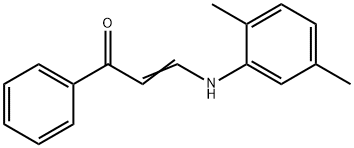
TRAF-STOP inhibitor 6877002 (10 μmol/kg; intraperitoneal injection; once a day; 6 weeks) retards the development of early atherosclerosis and reduces atherosclerotic plaque area in apolipoprotein E-deficient (Apoe-/-) mice[1].
TRAF-STOP inhibitor 6877002 (10 μmol/kg; intraperitoneal injection; once a day; 6 weeks) halts the progression of established atherosclerosis, induces a stable plaque phenotype, reduces macrophage number and proliferation, decreases the size of necrotic cores, reduces the number of neutrophils and T cells, and increases collagen and αSMA+ smooth muscle cell content in atherosclerotic plaques in apolipoprotein E-deficient (Apoe-/-) mice[1].
TRAF-STOP inhibitor 6877002 (10 μmol/kg; administered via recombinant high-density lipoprotein nanoparticles; twice a week; 6 weeks) reduces plaque volume in the aortic root and the number of macrophages in plaques in apolipoprotein E-deficient (Apoe-/-) mice[1].
| Animal Model: | Male apolipoprotein E-deficient (Apoe-/-) mice (22 weeks old), with advanced atherosclerotic lesions already present in the aortic arch to establish an established atherosclerosis model[1]. |
| Dosage: | 10 μmol/kg (vehicle: PBS, 0.05% Tween 80, 5% dimethylsulfoxide) |
| Administration: | Intraperitoneal injection, once a day, for 6 weeks |
| Result: | Halted the progression of established atherosclerosis, reduced the total atherosclerotic plaque area in the aortic arch and aortic root. The atherosclerotic plaques exhibited a stable phenotype with decreased macrophage number and proliferation, smaller necrotic cores, fewer neutrophils and T cells, and increased collagen and αSMA+ smooth muscle cell content. |
| Animal Model: | Male apolipoprotein E-deficient (Apoe-/-) mice (12 weeks old), fed a normal chow diet to establish an atherosclerosis-prone model[1]. |
| Dosage: | 10 μmol/kg (vehicle: PBS, 0.05% Tween 80, 5% dimethylsulfoxide) |
| Administration: | Intraperitoneal injection, once a day, for 6 weeks |
| Result: | Retarded the development of early atherosclerosis, reduced atherosclerotic plaque area in the aortic arch, and the plaques contained fewer macrophages, T cells, and neutrophils. There were no changes in the number of proliferating or apoptotic cells, plaque smooth muscle cell or collagen content. |
| Animal Model: | Male apolipoprotein E-deficient (Apoe-/-) mice (12 weeks old) with atherosclerosis model[1]. |
| Dosage: | 10 μmol/kg (packaged in recombinant high-density lipoprotein nanoparticles) |
| Administration: | Administered via recombinant high-density lipoprotein nanoparticles, twice a week, for 6 weeks |
| Result: | Reduced plaque volume in the aortic root and the number of macrophages in plaques. |