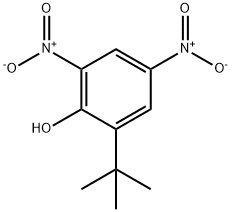
Dinoterb is a yellow solid. May be formulatedin a hydrocarbon solvent which changes the physical properties shown here. Molecular weight= 240.24; Freezing/Melting point = 126℃. Hazard Identification (based onNFPA-704 M Rating System): Health 3, Flammability 1,Reactivity 2. Practically insoluble in water.
The commercial production of dinoterb involves a multi-step process. It begins with the nitration of 2-tert-butylphenol using a mixture of nitric and sulphuric acids under controlled temperature to introduce nitro groups at the 4 and 6 positions, forming 2-tert-butyl-4,6-dinitrophenol. The reaction is carefully monitored to maximise yield and minimize byproducts.
ChEBI: Dinoterb is a member of phenols and a C-nitro compound.
Yellow solid. Used as a herbicide and a rodenticide.
Slightly soluble in water.
Nitrophenolates, such as DINOTERB, range from slight to strong oxidizing agents. If mixed with reducing agents, including hydrides, sulfides and nitrides, they may begin a vigorous reaction that culminates in a detonation. The aromatic nitro compounds may explode in the presence of a base such as sodium hydroxide or potassium hydroxide even in the presence of water or organic solvents. The explosive tendencies of aromatic nitro compounds are increased by the presence of multiple nitro groups. Severe explosion hazard when dry.
DINOTERB is toxic by all routes of exposure. The dangerous single oral dose of dinitro-o- cresol, a structurally similar compound, is estimated to be about 29 mg/kg.
When heated to decomposition DINOTERB emits toxic nitrogen oxide fumes.
Herbicide, Rodenticide: Not approved for use in the U.S. or EU countries
There are 17 global suppliers.
HERBOGIL®; HERBOGIL® FLUSSIG
Selective, non-systemic with contact action. Uncoupler of oxidative phosphorylation via disruption of proton gradient - membrane distruption.
This material is an herbicide and arodenticide
Substituted nitrophenol pesticides, solid, toxic,require a “POISONOUS/TOXIC MATERIALS” label. Theyfall in Hazard Class 6.1 and dinoterb in Packing Group II.
Symptoms of poisoning are similarto other dinitrophenols and may include nausea, gastric distress, restlessness, sensation of heat, flushed skin, sweating,thirst, deep and rapid breathing, rapid heart rate, fever, andlack of oxygen to tissues (blueness of skin). This compoundis toxic by all routes of exposure. The dangerous single oraldose of dinitro-o-cresol, a structurally similar compound, isestimated to be about 29 mg/kg.