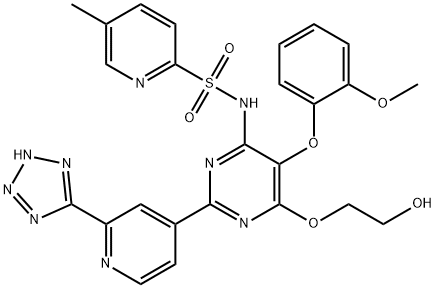
Under alkaline conditions, o-hydroxyanisole (11.1) was alkylated with diethyl bromomalonate, followed by cyclization of the diester 11.2 and the amidine 11.3 to give the pyrimidine 11.4. Amidation of the pyridine ring was performed under modified Minisci conditions, but no yields were reported for the conversion of pyridine 11.4 to 2-carboxyamide pyridine 11.5. Addition of dihydroxypyrimidine 11.5 to phosphorus oxychloride under alkaline conditions resulted in conversion of the hydroxyl group to the corresponding chloride, with simultaneous dehydration of the amide to give the nitrile 11.6. Substitution with commercially available sulfonamide 11.7 under mild conditions allowed the introduction of a single pyridinesulfonamide 11.8, followed by nucleophilic addition of hydrazine to the nitrile to give the iminohydrazine 11.9. Treatment with sodium nitrite under weakly acidic conditions promoted tetrazole formation, followed by substitution of the remaining aryl chloride with ethylene glycol in the presence of sodium hydroxide. The remaining aryl chloride underwent substitution with ethylene glycol. Finally, exposure of clazotan to heated sodium methoxide/methanol followed by careful cooling and filtration afforded the disodium salt of clazotan sodium (11) in 41% yield from chloropyrimidine 11.10.