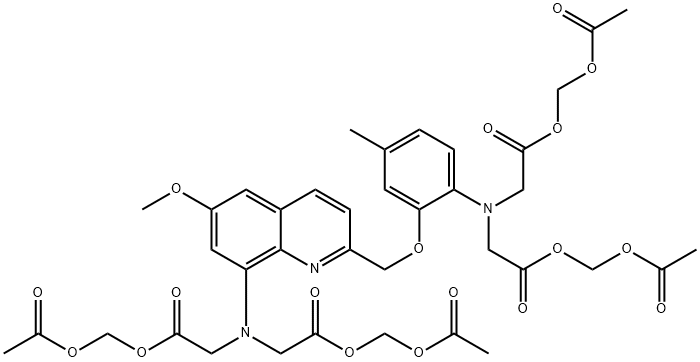
Quin-2 AM is a cell-permeant acetoxymethyl ester of the high affinity fluorescent calcium indicator quin-2 . As quin-2 AM enters cells, it is hydrolyzed by intracellular esterases to produce quin-2. Quin-2 binds calcium with a Kd value of 115 nM. It displays high selectivity for calcium, as it is not affected by sodium gradients, membrane potential, or intracellular pH. High affinity probes like quin-2 are ideal for monitoring low levels of calcium, as are found in resting cells. Loadings of up to 2 mM quin-2 are without serious toxic effects, so quin-2 may be used to buffer intracellular calcium transients. Excitation and emission maxima for quin-2 are 339 and 492 nm, respectively.
2-[(2-Amino-5-methylphenoxy)methyl]-6-methoxy-8-aminoquinoline-N,N,N',N'-tetraacetic acid tetrakis(acetoxymethyl ester)
[1] R Y TSIEN T J R T Pozzan. Calcium homeostasis in intact lymphocytes: cytoplasmic free calcium monitored with a new, intracellularly trapped fluorescent indicator.[J]. Journal of Cell Biology, 1982, 94 2: 325-334. DOI:
10.1083/jcb.94.2.325[2] A. MINTA R T J Kao. Fluorescent indicators for cytosolic calcium based on rhodamine and fluorescein chromophores.[J]. The Journal of Biological Chemistry, 1989, 13 1: 8171-8178. DOI:
10.1016/s0021-9258(18)83165-9