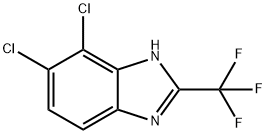
chlorflurazole is an obsolete cereal herbicide. It is moderately soluble in water but little else is known about its environmental fate or ecotoxicology. it has a high mammalian oral toxicity.
Information is scant but chlorflurazole would probably have been manufactured by first preparing a halogenated benzene precursor (typically a 4,5 dichloro substituted aromatic ring) and introducing a trifluoromethyl group through electrophilic or nucleophilic fluorination. This substituted aromatic intermediate is then condensed with o phenylenediamine, followed by cyclisation under acidic or catalytic conditions to form the benzimidazole core. Final steps involve purification, usually solvent extraction and recrystallisation, to yield technical grade chlorfluazole.
A crystalline solid. Fine white needles when pure; the commercial material is brownish. Used as an herbicide.
4,5-dichloro-2-trifluoromethylBenzimidazole is a halogenated amine. Neutralizes acids in exothermic reactions to form salts plus water. May be incompatible with isocyanates, halogenated organics, peroxides, phenols (acidic), epoxides, anhydrides, and acid halides. Flammable gaseous hydrogen may be generated in combination with strong reducing agents, such as hydrides.
(Non-specific -- Pesticide, solid, n.o.s.) Poisonous if swallowed. Inhalation of dust poisonous.
(Non-Specific -- Pesticide, solid, n.o.s.) Fire may produce irritating or poisonous gases. Runoff from fire control or dilution water may cause pollution. Avoid amine salts of hormone herbicides, alkali-unstable fungicides or insecticides.
Uncoupler of the oxidative phosphorylation process