Inorganic salts
Silicide and silicates
Colloidal precious metals
Metal Sulphides and sulphates
Metal halide and Halogen salt
Metal nitrates and nitrites
Metal salts
Hydrazine and hydroxylamine salts
Phosphide And metal phosphates
Manganese oxides and peroxides
Borides, borates and borate
Hydrides, nitrides, azides
Cyanide, hydroxide and hydrogen complexes
Strontium or barium oxides and peroxides
Carbides and carbonates
Rare Earth Metals Oxides
Inorganic ammonium salts
Chalcogenide
Inorganic salt is an essential nutrition for human and animal. They are mostly in the combination form when in food, and often dissociated into inorganic salt ions in the body fluid. There are also a small amount of inorganic salts in the body fluid combined with protein, especially trace elements. According to their difference in electrical charge, inorganic salts can be divided into cations and anions. Na +, K +, Ca2 +, Mg2 +, Cl-, HCO3-, HPO42- are the main inorganic salts due to their large content while Fe2 +, Fe3 +, Cu +, Cu2 +, Mn2 +, Mn4 +, CO2 +, Cr3 +, Cr6 +, Cd2 +, Zn2 +, Br - I- are called trace elements for their trace amounts in the body.
Click on the specific product, view the latest prices of the products, information, serving information
- Structure:
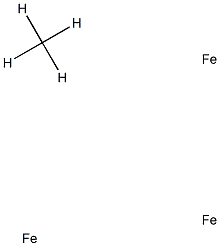
- Chemical Name:triiron carbide
- CAS:12011-67-5
- MF:CH4Fe3