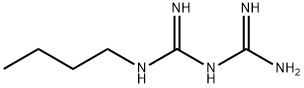
Uses
Buformin, clinically used for diabetes mellitus, is known to improve resistance to insulin in patients. It suppresses the expression of glyceraldehyde 3-phosphate dehydrogenase
Definition
ChEBI: Buformin is a member of the class of biguanides that is biguanide substituted by a butyl group at position 1. It is an antidiabetic drug with potential antitumor effect. It has a role as a hypoglycemic agent, a geroprotector, a radiosensitizing agent, an antineoplastic agent and an antiviral agent. It is functionally related to a biguanide.
brand name
Adebit;Andebit;Andelit;Andere;Biforon;Bigunal;Biquinal;Bs-5892;Bufonamin;Bulbonin;Diabrin;Dutformin;Gliporal;Insulamin;Krebon;Panformin;Silubin retard;Sindiatil;Tidemol retard;Ziavetine.
World Health Organization (WHO)
Buformin is an analogue of phenformin. See WHO comment for
phenformin.
(Reference: (WHODI) WHO Drug Information, 2, 4, 1977)
in vivo
Buformin (oral administation; 7.6mmol/kg of chow; 7 days) exhibits significantly reduced tumor volumes and weights, andhinders mammary morphogenesis and proliferation in MMTV-erbB-2 transgenic mice[1]
| Animal Model: | Female MMTV-erbB-2 transgenic mice[1] |
| Dosage: | 7.6mmol/kg |
| Administration: | Oral administation; 7 days |
| Result: | Inhibited mammary syngeneic tumor growth in MMTV-erbB-2 transgenic mice. |