Uses
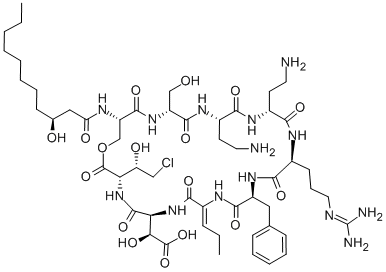
Syringomycin E is an antifungal cyclic lipodepsinonapeptide. Syringomycin E exhibits growth inhibition of Saccharomyces cerevisiae through interaction with the plasma membrane. Syringomycin E causes K+ efflux, Ca2+ influx, and changes in membrane potential, and is related to channel formation[1][2].
Definition
ChEBI: A member of the class of syringomycins that has 3-hydroxydodecanoyl as the fatty acyl tail group. It is isolated from Pseudomonas syringae pv. syringae and exhibits phytotoxic and antifungal properties.
References
[1] Stock SD, et al. Syringomycin E inhibition of Saccharomyces cerevisiae: requirement for biosynthesis of sphingolipids with very-long-chain fatty acids and mannose- and phosphoinositol-containing head groups. Antimicrob Agents Chemother. 2000 May;44(5):1174-80. DOI:
10.1128/AAC.44.5.1174-1180.2000[2] Efimova SS, et al. Alkaloids Modulate the Functioning of Ion Channels Produced by Antimicrobial Agents via an Influence on the Lipid Host. Front Cell Dev Biol. 2020 Jun 30;8:537. DOI:
10.3389/fcell.2020.00537