Synthesis
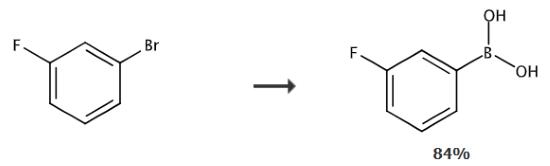
The molar ratio of 3-fluorobromobenzene:magnesium:trimethyl borate is 1.0:1.1:1.5. The total mass of the solvent 2-methyltetrahydrofuran is 7 times the mass of 3-fluorobromobenzene.
The synthesis of 768-35-4 is synthesized in the following molar ratio: 1.0:1.1:1.5.
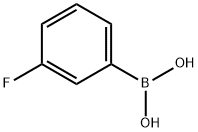
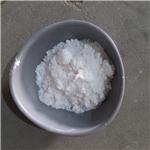
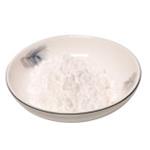
Add 2.6 g (0.11 mol) of magnesium filings and 1-2 grains of iodine to a 250 mL four-necked flask equipped with a reflux condenser and a constant-pressure dropping funnel. Add 30 g of 2-methyltetrahydrofuran. Under N2 protection at 40 °C, add 22.5 g of a 2-methyltetrahydrofuran solution containing 17.5 g (0.10 mol) of 3-fluorobromobenzene. After stirring to initiate the reaction, add the remaining 3-fluorobromobenzene solution. After the addition is complete, react at this temperature for 3 hours to prepare a 2-methyltetrahydrofuran solution of 3-fluorophenyl magnesium bromide. In a 500 mL four-necked flask, add 15.6 g (0.153 mol) of trimethyl borate and 90.0 g of 2-tetrahydrofuran. Cool to -20 °C under N2 protection. Add the above Grignard reagent solution. After the addition is complete, maintain the temperature for 3 hours. At this temperature, 100 mL of 8% hydrochloric acid was added, and the hydrolysis reaction was carried out for 2 hours. The organic phase was separated, and the aqueous layer was extracted with 2-methyltetrahydrofuran, then washed with saturated brine until neutral. The organic phases were combined, dried over anhydrous sodium sulfate, and the solvent was recovered under reduced pressure. The crude product was recrystallized from 1,2-dichloroethane to give 11.7 g of 3-fluorophenylboronic acid, white needle-like crystals, with a yield of 83.7%, an HPLC purity of 99.6%, and a melting point of 217.6–218.3 °C.
Uses
Recently used to make novel liquid crystalline fluorobiphenylcyclohexenes and difluoroterphenyls by palladium-catalyzed cross-couplings also used in the synthesis of
o-phenylphenols as potent leukotriene B4 receptor agonists.