Description
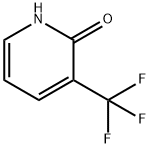
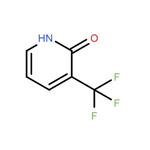
2-hydroxy-3-(trifluoromethyl)pyridine (or 3-(Trifluoromethyl)-2-pyridone) is a trifluoromethyl substituted 2-hydroxypyridine. It is used as a synthesis intermediate for ligands and bioactive ingredients in the application of drug discovery and catalytic reactions. In catalytic reactions, the amide group of 2-pyridone binds to transition metals, forming stable 5-/6-membered ring intermediates. Hence, 2-hydroxy-3-(trifluoromethyl)pyridine is widely used as a ligand in catalytic reactions such as directed C-H activation on meta-position. In addition, the trifluoromethyl substituent of 3-(trifluoromethyl)-2-pyridone tunes its metal-binding affinity and limits the reaction site for improving regioselectivity.
Uses
2-Hydroxy-3-trifluoromethylpyridine is a reactant in the synthesis of Pyrido[2,3-b]pyrazine, a TRPV1 antagonist .

Synthesis
General procedure: 2-hydroxypyridine (0.19 g, 2.0 mmol) and ferrocene (0.11 g, 0.6 mmol) were accurately weighed and placed in a dry two-necked flask and the atmosphere was replaced under argon protection. Dimethyl sulfoxide (8.0 mL), 3.0 mol/L trifluoromethyl iodine in dimethyl sulfoxide solution (2.0 mL) and 30% aqueous hydrogen peroxide solution (0.4 mL) were added sequentially to the flask, and the reaction mixture was stirred for 20 min at 40 °C to 50 °C. After completion of the reaction, the mixture was cooled to room temperature. The generation of 2-hydroxy-3-trifluoromethylpyridine was confirmed by 19F-NMR analysis using 2,2,2-trifluoroethanol as an internal standard (19F-NMR yield: 64%). Following the subsequent processing steps of Example 1, the target product 2-hydroxy-3-trifluoromethylpyridine was obtained as a white solid (0.081 g, yield: 50%). The structure of the product was determined by 1H-NMR (deuterated chloroform, δ 6.34 (dd, J = 6.9, 5.5 Hz, 1H), 7.65 (d, J = 5.6 Hz, 1H), 7.88 (d, J = 6.9 Hz, 1H), 13.25 (brs, 1H)), 13C-NMR (deuterated chloroform, δ 105.6, 120.4 (q, JCF = 31.4 Hz), 122.7 (q, JCF = 271.3 Hz), 139.2, 140.7 (q, JCF = 4.9 Hz), 161), 19F-NMR (deuterated chloroform, δ -66), and mass spectrometry (m/z: 163 [M]+) confirmed.
References
[1] Patent: EP2080744, 2009, A1. Location in patent: Page/Page column 7-8
[2] Journal of Fluorine Chemistry, 2010, vol. 131, # 1, p. 98 - 105