Synthesis
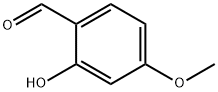
Paraformaldehyde (67.5 mmol) was added to a mixture of a phenolic derivative (10 mmol), anhydrous MgCl2 (1.43 g, 15 mmol), and Et3N (5.3 mL, 37.5 mmol) in THF (50 mL). The mixture was heated under reflux for 24 hours, or until the material was completely consumed at room temperature as determined by TLC. The reaction mixture was cooled to room temperature. The reaction mixture was quenched with 1 M HCl. The product was extracted with EtOAc (50 mL x 3). The organic layers were combined. The organic layers were washed with saturated brine. The organic layers were dried with Na2SO4. The organic layers were filtered. All volatiles were removed under reduced pressure. 2-Hydroxy-4-methoxybenzaldehyde was isolated by rapid chromatography (EtOAc/hexane) on silica gel.
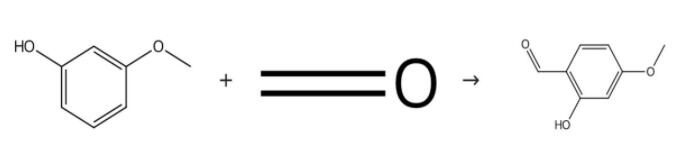
Figure 2-Hydroxy-4-methoxybenzaldehyde
Chemical Properties
creamy white to beige or light brown cryst. powder
Uses
2-Hydroxy-4-methoxybenzaldehyde was used in the synthesis of Schiff base ligand.
Definition
ChEBI: 2-Hydroxy-4-methoxybenzaldehyde is a member of methoxybenzenes and a member of phenols.
General Description
2-Hydroxy-4-methoxybenzaldehyde is the main component of root bark essential oil of
Periploca sepium Bunge. It is a potential tyrosinase inhibitor present in African medicinal plants.