Uses
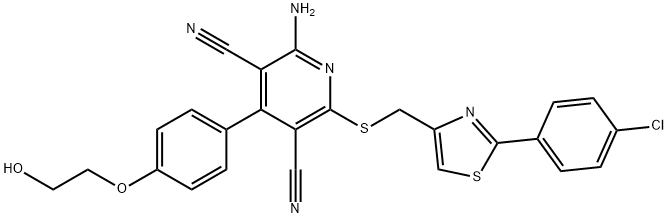
Capadenoson is a selective agonist of adenosine-A1 receptor.
Biological Activity
Capadenoson (BAY 68-4986) is an adenosine receptor A1 (A1AR) partial agonist (GTPγS binding EC50/Emax = 0.1 nM/74% vs. 0.3 nM/100% with CCPA; human cortex membranes) th at exerts additional biased A2BAR agonism toward cAMP signal transduction (pEC50 = 8.94/cAMP, 6.20/Ca+2, 6.12/pERK, 5.03/IP1), while exhibiting weak A2A & A3 potency. Capadenoson offers cardioprotection efficacy in an ischemia-reperfusion injury r at model in vivo (25/28% infarct size reduction with 0.1/0.3 mg/kg iv.) without the risk of a full atrioventricular (AV) block (isolated perfused r at heart rate = 100% up to 10 nM, 90% at ≥10 μM) seen with the full A1 agonist CCPA.
Synthesis
5.334 kg (24.90 mol) of 2-[4-(2-hydroxyethoxy)benzylidene]malononitrile (XI) and 1.309 kg (13.07 mol) of 2-cyano thioacetamide (XII) were suspended in 27.4 kg (34.8 l) of methanol. The suspension was warmed to 40C and 3.779 kg (37.35 mol) of triethylamine was added metrically at up to 40C. The mixture was stirred at 40C for another 3h and cooled to room temperature. 3.147kg (12.45mol) of 4-(chloromethyl)-2-(4-chlorophenyl)-1,3-thiazole (XIV) was added to the dark brown solution and the contents of the vessel were stirred at room temperature overnight. The extant suspension was cooled to 5C, separated by filtration and washed with a total of 11.7 kg (14.85 l) of methanol. The wet product was dried in a vacuum drying oven at 50C. This yielded 4862 g or 75.1% of the theoretical value as a beige-light green solid of 2-amino-6-({[2-(4-chlorophenyl)-1,3-thiazol-4-yl]methyl}sulfanyl)-4-[4-(2-hydroxyethoxy)phenyl]pyridine-3,5-dicarbonitrile (kapanoside, 95.5%, ESTD). hplc method A: retention time ca. 14.1min. .
in vivo
In the in vivo experiments, Wistar rats and SHR are pre-treated with Capadenoson at a concentration of 0.15 mg/kg for 5 days. On day 5, a stress test (physical restraint) is performed for 2 hours. The plasma concentration of Capadenoson measured 3 hours after drug intake remains constant in the 5 days prior to the restraint stress test and averaged 7.63 μg/L on day 4 and 5, respectively[1].
target
adenosine A1 receptor
References
[1] Bott-Flügel L, et al. Selective attenuation of norepinephrine release and stress-induced heart rate increase by partial adenosine A1 agonism. PLoS One. 2011 Mar 28;6(3):e18048. DOI:
10.1371/journal.pone.0018048[2] Bailey IR, et al. Optimization of Thermolytic Response to A1 Adenosine Receptor Agonists in Rats. J Pharmacol Exp Ther. 2017 Sep;362(3):424-430. DOI:
10.1124/jpet.117.241315