Uses
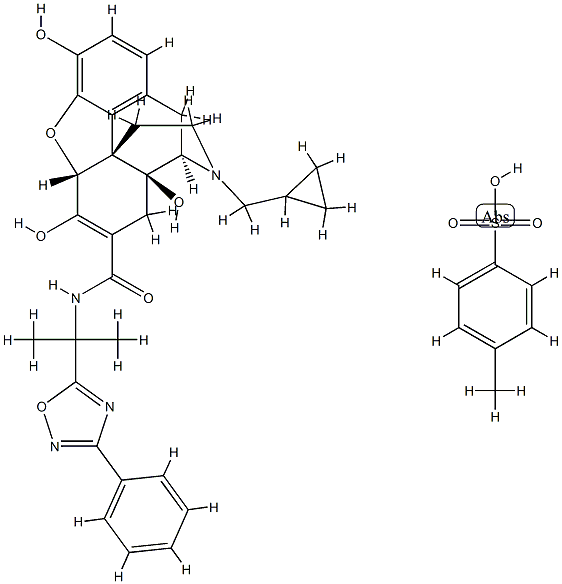
Naldemedine (S-297995) tosylate is an orally active μ-opioid receptor antagonist (PAMORA)[1]. Naldemedine tosylate shows potent binding affinities (Ki=0.34, 0.43, 0.94 nM, respectively) and antagonist activities (IC50=25.57, 7.09, 16.1 nM, respectively) for recombinant human μ-, δ-, and κ- opioid receptors[2]. Naldemedine can be used in opioid-induced constipation (OIC) research[2]. Naldemedine tosylate is predicted to bind to 3CLpro encoded by SARS-CoV2 genome[3].
in vivo
Naldemedine tosylate (oral gavage; 0.03-10 mg/kg; once) represses the opioid-induced inhibition of small intestinal transit in rats[2].
| Animal Model: | 6-week-old Wistar and SD male rats[2] |
| Dosage: | 0.03-10 mg/kg |
| Administration: | Oral gavage; 0.03-10 mg/kg; once |
| Result: | Repressed the subcutaneous inhibition of small intestinal transit in rats with an ED50 of 0.03 mg/kg |
IC 50
μ Opioid Receptor/MOR
References
[1] Hannah A. Blair. Naldemedine: A Review in Opioid-Induced Constipation. Drugs. 2019 Jul;79(11):1241-1247. DOI:
10.1007/s40265-019-01160-7[2] Toshiyuki Kanemasa, et al. Pharmacologic effects of naldemedine, a peripherally acting μ-opioid receptor antagonist, in in vitro and in vivo models of opioid-induced constipation. Neurogastroenterol Motil. 2019 May;31(5):e13563. DOI:
10.1111/nmo.13563[3] Sugandh Kumar, et al. Identification of multipotent drugs for COVID-19 therapeutics with the evaluation of their SARS-CoV2 inhibitory activity. Comput Struct Biotechnol J. 2021;19:1998-2017. DOI:
10.1016/j.csbj.2021.04.014