Preparation
In a 50 mL flask, 1 g of p-nitrophenol and 2 g of lead powder were added and dissolved in 10 mL of methanol. 4 L of triethylamine carboxylate was added with stirring, and nitrogen was bubbled through. The reaction was carried out at room temperature, and the solution quickly turned brownish-red. The reaction was monitored by TLC for 2 hours, after which the reaction was stopped. The reaction mixture was filtered to remove insoluble matter, and the combined solution was washed with 20 mL of methanol. The mixture was concentrated under reduced pressure to remove most of the solvent. The residue was washed successively with diethyl ether, saturated brine, and water. The organic layer was separated, and the aqueous layer was extracted with acetyl. The organic layers were combined and dried overnight with anhydrous magnesium sulfate. After filtering to remove magnesium sulfate, acetaldehyde was evaporated under reduced pressure using a rotary evaporator. The residue was poured onto a large petri dish for volatilization, precipitating a dark red product. Benzene was recrystallized. The product was dried under vacuum at 50 °C to obtain 0.63 g of product, yield 82%, mp 215-216 °C.
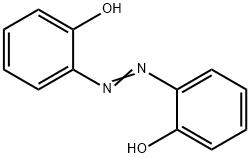
2,2'-Dihydroxyazobenzene was prepared by reduction reaction using p-nitrophenol as a raw material, triethylamine formate and lead as reducing agents, and methanol as a solvent. The optimal reaction conditions were: reaction time 2.5 hours, lead dosage 12.07 mmol, triethylamine formate dosage 4 g, and a conversion rate of 82%.
General Description
2,2′-Dihydroxyazobenzene is a small molecule inhibitor of ADP ribosyl cyclase and it attenuates angiotensin (Ang) II-induced hypertrophic responses. 2,2′-Dihydroxyazobenzene is formed during the oxidation of diclofenac by myeloperoxidase/hydrogen peroxide.