Synthesis
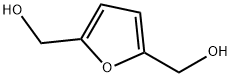
Furan-2,5-dicarbaldehyde (DFF) can be prepared from carbohydrates (such as fructose, sucrose, and palmose) via a two-step or one-step direct synthesis method. In the two-step method, the production of the HMF intermediate is essential. Typically, DFF can be prepared from 5-HMF through oxidation, homogeneous or heterogeneous catalysis, metal oxide catalysis, and enzyme catalysis. However, the high price and low stability of 5-HMF limit the large-scale production of DFF. In the one-step method, carbohydrates are converted to HMF and then immediately converted to DFF without separation. This requires a catalytic system that exhibits both acidity to promote the dehydration of carbohydrates and oxidizing properties to immediately oxidize HMF to DFF. The synthetic route is as follows:

The optimal reaction conditions are: fructose (1.0 equiv., 100 mg), Amberlite IR 120 H (25 wt%, 25.0 mg), KBr (0.5 equiv., 33.0 mg), DMSO (1.5 mL) as solvent, reaction at 120 °C for 12 h, which can yield the product DFF with a maximum NMR yield of 80%.

Description
2,5-Furandicarboxaldehyde is one of the most important platform molecules in the organic chemicals industry.It is a member of the class of furans carrying two formyl substituents at positions 2 and 5. It is a member of furans, an arenecarbaldehyde and a dialdehyde.
Uses
2,5-diformylfuran (DFF) is a versatile chemical intermediate for the synthesis of pharmaceuticals, fungicides, furan-urea resins or heterocyclic ligands.