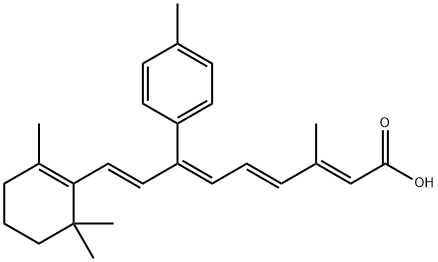
Description
The receptors for retinoids, RARs and RXRs, induce transcriptional activation by binding the specific retinoid response elements, RARE and RXRE. Alternatively, retinoid receptors interact with and modulate other transcription factors, including activator protein-1 (AP-1). SR 11302 is a synthetic retinoid that inhibits AP-1 activity without activating transcription through RARE. It significantly suppresses both AP-1 activation and phorbol ester-induced papilloma formation in mice when applied topically (0.1 μM). SR 11302 is used to elucidate the role of AP-1 in various signaling pathways.
Biological Activity
Inhibitor of activator protein-1 (AP-1) transcription factor activity that displays antitumor effects in vivo . Does not activate transcription from the retinoic acid response element (RARE) and displays no activity at retinoic acid receptors (EC 50 > 1 μ M for RAR α , RAR β , RAR γ and RXR α ).
References
[1] MD M D. A new class of retinoids with selective inhibition of AP-1 inhibits proliferation[J]. Journal of the American Academy of Dermatology, 1995, 33 1: Page 109. DOI:
10.1016/0190-9622(95)90031-4[2] C HUANG. Blocking activator protein-1 activity, but not activating retinoic acid response element, is required for the antitumor promotion effect of retinoic acid.[J]. Proceedings of the National Academy of Sciences of the United States of America, 1997, 94 11: 5826-5830. DOI:
10.1073/pnas.94.11.5826[3] M SHIOHARA. Effects of novel RAR- and RXR-selective retinoids on myeloid leukemic proliferation and differentiation in vitro.[J]. Blood, 1999, 93 6: 2057-2066.
[4] HANNU KANKAANRANTA. Tumour necrosis factor-α regulates human eosinophil apoptosis via ligation of TNF-receptor 1 and balance between NF-κB and AP-1.[J]. PLoS ONE, 2014: e90298. DOI:
10.1371/journal.pone.0090298