Uses
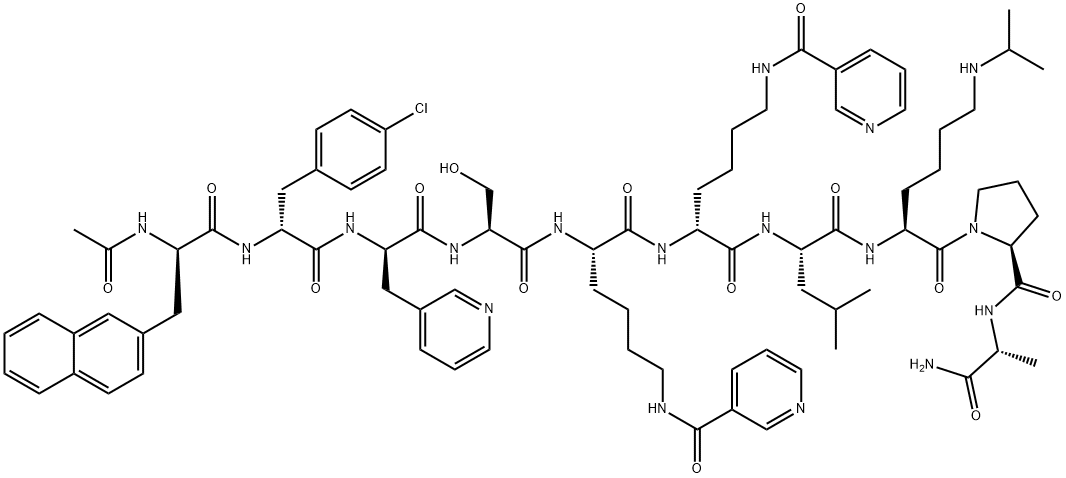
Antide, is a GnRH and LH-RH antagonist, and with high anti-ovulatory and negligible histamine release activity.
Uses
Reversible inhibition of gonadotropin secretion and subsequent suppression of ovarian and testicular steroid secretio (gonadotropin releasing hormone antagonist).
Synthesis
Antide acetate was prepared as follows: the peptide intermediate was first treated with a suitable thiol to remove the Nps protecting group. It was then reacted with 2-benzyl-4-carboxypyridine in DMF in DCC as a coupling agent to acylate the Orn residue at the 5-position. After washing, the peptide resin was treated with piperidine to remove the Fmoc protecting group, followed by treatment with nicotinic acid and DIIC to acylate the D-Lys residue at the 6-position. Following cleavage and HPLC purification, the GnRH antagonist was tested and the peptide was considered effective in preventing ovulation in low-dose female mammals.
in vivo
Antide (subcutaneously; 1, 3, 6, 10 and 15 mg/kg; once or on 5 consecutive days) can induce a long-term chemical castration in adult male rats and cynomolgus monkeys[1].
| Animal Model: | Cynomolgus monkey and rat[1] |
| Dosage: | 1, 3, 6, 10 and 15 mg/kg |
| Administration: | Subcutaneous, once or on 5 consecutive days |
| Result: | Had a dose-dependent inhibitory effect on serum concentration of LH (only rat) and testosterone and on the weights of the testes, prostates and seminal vesicles.
Achieved long-lasting castration-like effects at concentrations between 6 (less than or equal to 8 weeks) and 15 mg/kg (greater than 8 weeks) in the rat.
Induced a prolonged inhibitory effect only at 15 mg/kg and the duration was only 2-3 weeks in the cynomolgus monkey.
|
Description
Antide acetate (Ac-AA10-NH
2) is an LHRH antagonist and represses LH and FSH release from the pituitary gland. Antide Mw is 1590.6 Dalton.