Description
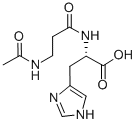
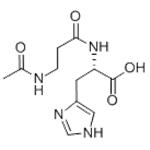
N-acetyl-L-Carnosine is a dipeptide and acetylated form of L-carnosine that has been found in heart and skeletal muscle and has antioxidant and anticataract activities. It reduces iron- and ascorbate-induced malondialdehyde (MDA) accumulation in liposomes when used at concentrations of 10 and 20 mM. Topical administration of N-acetyl-L-carnosine (1% v/v) reduces cortical opacities in a canine model of age-related cataracts.
Chemical Properties
White Crystalline Solid
Uses
N-acetyl-L-Carnosine is used in the treatment of cataracts and in the treatment of UV-induced immunosuppression
Definition
ChEBI: A dipeptide that is the N-acetyl derivative of carnosine.
Synthesis
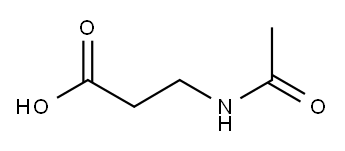
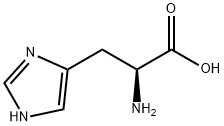
In a 500 mL three-necked flask, 300 mL of anhydrous ethanol was added and 80 g (0.611 mol) of N-acetyl-β-alanine and 86.1 g (0.555 mol) of L-histidine were sequentially added followed by 98 g (0.582 mol) of N,N'-dimethylcarbodiimide (DMC). The reaction mixture was heated to 40°C and the reaction was kept stirring for 3 hours. Upon completion of the reaction, the reaction solution was cooled to 5°C, a solid was precipitated and the solid product was collected by filtration. The filter cake was washed with 150 mL of anhydrous ethanol and dried under vacuum to give 145 g of (S)-2-(3-acetamidopropionamide)-3-(1H-imidazol-4-yl)propanoic acid (IV) in 97.9% yield and >98.8% HPLC purity.
in vivo
Right eyes of the rabbits (male grey chinchilla rabbits aged 3-4 months weighing 2-3 k) are instilled with 80 μL of formulation A containing 1 % N-Acetylcarnosine. The N-Acetylcarnosine prodrug eye drops optimize the clinical effects for the treatment of ophthalmic disorders (such as prevention and reversal of cataracts in human and animal eyes)[1].
IC 50
Human Endogenous Metabolite
References
[1] Patent: CN105461632, 2016, A. Location in patent: Paragraph 0046