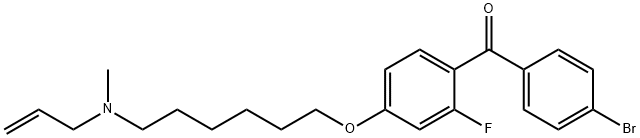
Description
Oxidosqualene cyclase (OSC) is a microsomal enzyme that catalyzes the cyclization of monooxidosqualene to lanosterol in the cholesterol synthetic pathway. Ro 48-
8071 is an inhibitor of oxidosqualene cyclase (OSC) that has low-
density lipoprotein (LDL) cholesterol lowering activity similar to the 3-
hydroxy-
3-
methylglutaryl coenzyme A (HMG-
CoA) inhibitor simvastatin. It inhibits OSC from human liver microsomes and HepG2 cells with IC
50 values of approximately 6.5 nM and 1.5 nM, respectively. Ro 48-
8071 lowered LDL cholesterol ~40% in hamsters at a dose of 150 μg/kg without affecting high-
density lipoprotein levels and with no sign of liver toxicity. Ro 48-
8071 increases cytochrome P3A mRNA and protein levels in primary rat and murine hepatocyte cultures with a maximal effect at 30 μM.
in vivo
Ro 48-8071 lowers LDL-C maximally appr 60% at 150 μmol/kg per day, with no further reduction up to 300 μmol/kg per day, leaving HDL-C unchanged at all doses in hamsters. Ro 48-8071 (≥00 μmol/kg per day) increases the amount of MOS in liver of hamsters. Ro 48-8071 (300 μmol/kg per day) remarkedly and significantly reduces VLDL secretion of hamsters[1]. Ro 48-8071 (5 or 20 mg/kg) significantly reduces in vivo tumor growth in mice, without weight loss of the mice. Furthermore, Ro 48-8071 at a concentration of 20 mg/kg, completely eradicates two of the 12 tumors being monitored in the mice in the timeframe tested[2]. Ro 48-8071 (20 mg/day/kg body weight) leads to a rapid and sustained inhibition (>50%) of cholesterol synthesis in the whole small intestine of BALB/c mice. Sterol synthesis is also reduced in the large intestine and stomach[4].
References
[1] O H MORAND. Ro 48-8.071, a new 2,3-oxidosqualene:lanosterol cyclase inhibitor lowering plasma cholesterol in hamsters, squirrel monkeys, and minipigs: comparison to simvastatin.[J]. Journal of Lipid Research, 1997, 38 2: 373-390.
[2] SARITA D SHENOY. Induction of CYP3A by 2,3-oxidosqualene:lanosterol cyclase inhibitors is mediated by an endogenous squalene metabolite in primary cultured rat hepatocytes.[J]. Molecular Pharmacology, 2004, 65 5: 1302-1312. DOI:
10.1124/mol.65.5.1302