Synthesis
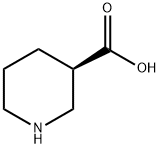
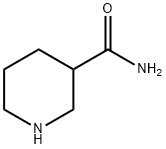
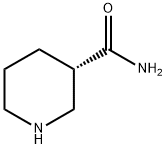
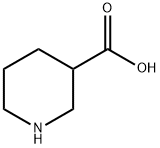
The general procedure for the synthesis of (S)-piperidine-3-carboxamide and 3-piperidinecarboxylic acid from 3-piperidinecarboxamide is as follows:
Example 3: Selective hydrolysis of the R-enantiomer of racemic 3-piperidinecarboxamide in Cupriavidus sp. strain KNK-J915 (FERM BP-10739). Bacterial cell suspensions were prepared by culturing strain KNK-J915 as in Example 1. 0.1 mL of bacterial cell suspension was mixed with 100 mM phosphate buffer (0.1 mL, pH 7.0) containing 1.0-5.0% racemic 3-piperidinecarboxamide and the mixture was reacted by shaking at 30°C for 35 hours. Upon completion of the reaction, solids such as bacterial cells were removed by centrifugation. Subsequently, the substrates and products in the reaction mixture were derivatized by reaction with benzyl chlorocarbonate. The resulting derivatives were analyzed by high performance liquid chromatography (HPLC) to determine conversion (percentage) and optical purity (ee percentage). The results are listed in Table 3.
HPLC analysis conditions:
- Conversion rate analyzing column: YMC-A303 (4.6 mm × 250 mm, manufactured by YMC Inc.), eluent: 20 mM aqueous phosphoric acid (pH 2.5)/acetonitrile = 7/3, flow rate: 1.0 mL/min, column temperature: 35 °C, detection wavelength: 210 nm.
- Optical purity analysis column: CHIRALPAK AD-RH (4.6 mm × 150 mm, manufactured by Daicel Chemical Industries, Ltd.), eluent: 20 mM phosphate buffer (pH 2.5)/acetonitrile = 7/3, flow rate: 0.5 mL/min, column temperature: room temperature, detection wavelength: 210 nm.