Chemical Properties
Clear pale yellow to yellow liquid. It is easily oxidized in air and may acquire a pale amber colour if exposed to air and daylight. Solidifies in the cold.
Uses
1,2,3,4-Tetrahydroquinoline is a reagent used in the synthesis of N-substituted benzoyl-1,2,3,4-tetrahydroquinolyl-1-carboxamides displaying fungicidal activity.
Definition
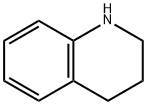
ChEBI: A member of the class of quinolines that is the 1,2,3,4-tetrahydro derivative of quinoline.
Application
1,2,3,4-Tetrahydroquinoline (THQ) is a fundamental structural unit that can be used as a pharmaceutical intermediate. THQ and its derivatives are frequently employed in the development of numerous compounds with significant biological activity, such as anticancer drugs, chronic pain inhibitors and agents for reversing multidrug resistance.
Safety
1,2,3,4-Tetrahydroquinoline is harmful to humans; it can be absorbed through the skin, causing skin irritation and severe eye irritation. Inhalation may cause respiratory tract irritation. Pharmacological studies indicate that it is toxic to the central nervous system, the cornea, the retina and the optic nerve; ingestion may cause liver damage and liver cancer.
Synthesis
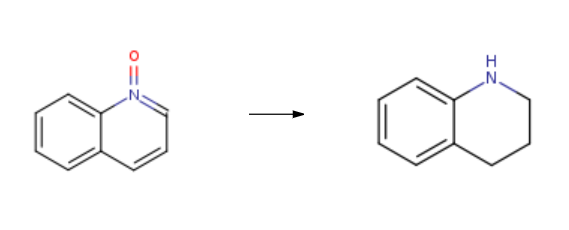
1,2,3,4-Tetrahydroquinoline is synthesised using quinoline N-oxide as a raw material by chemical reaction. The specific synthesis steps are as follows:
General procedure: In a 1.5 mL reaction vial, B(C6F5)3 (0.025 mmol, 5.0 mol %) was dissolved in chloroform (0.60 mL), towhich diethylsilane (1.75 mmol, 3.5 equiv) was added. After shaking briefly, quinolines (1a-p, 0.50 mmol, 1.0equiv) was subsequently added to the above catalyst solution under argon atmosphere. The reaction mixturewas stirred at 25-65 oC for 6-24 h for the reaction of 1a-h, and at 25-100 oC for 2-24 h for the reaction of 1i-p,then allowed to cool down to room temperature and concentrated under reduced pressure to give the crudeproduct. This reaction mixture was then treated with 0.25 N HCl ethereal solution (7 mL) and stirred at roomtemperature for 1 h to give the solid residue, which was subsequently washed with ether. The solid residue wasthen dissolved or suspended in MeOH (1.0 mL) and neutralized with Na
2CO
3·H
2O (0.5 g) at 0 oC. After stirringfor 2 h, MeOH was removed under reduced pressure, and the neutralized reaction residue was dissolved inCH
2Cl
2 and washed with brine (5 mL) and water (5 mL). The crude product was then obtained from the organicphase of CH
2Cl
2 solution and finally purified by column chromatography on silica gel to give 2a-h(EtOAc/Hexane = 1/9) and 2i-p (EtOAc/Hexane = 3/7).