Uses
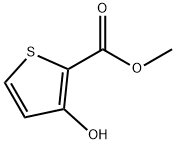
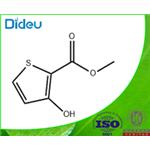
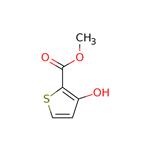
3-Hydroxy-2-thiophenecarboxylic Acid Methyl Ester, is used as a reactant in synthesizing nitro-products where reaction occurs with thiophenol.
Chemical Properties
white to light yellow crystal powder
Uses
Methyl 3-hydroxythiophene-2-carboxylate is used in medicine.
Synthesis
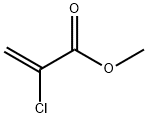
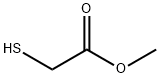
Methyl 3-hydroxy-2-thiophenecarboxylate was synthesized according to the method reported by Huddleston and Barker in Synth. Commun. 1979,9,8,731-734. The procedure was as follows: a 2 M solution of sodium methanol was prepared by adding sodium (700 mg; 30 mmol) to 15 mL of anhydrous methanol. Methyl mercaptoacetate (1.9 g; 18 mmol) was then added. The reaction solution was cooled to 0°C and methyl 2-chloroacrylate (2.1 g; 17.4 mmol) was added slowly and dropwise. The reaction mixture was stirred at room temperature overnight. After the reaction was complete, the mixture was cooled to 0°C again and the reaction was quenched with 4 M aqueous hydrochloric acid (~5 mL). Water was added and extracted twice with ethyl acetate. The organic phases were combined, dried over anhydrous sodium sulfate, filtered and concentrated under reduced pressure to give 2.0 g (70% yield) of brown oil, which solidified to a solid product after drying. The product could be used for subsequent reactions without further purification. The product was characterized as follows: LCMS m/z [M-H]-, retention time tR = 4.12 min, purity (UV/MS) 98/20; GCMS m/z 158 (M+), retention time tR = 4.52 min; 1H NMR (CDCl3, 400 MHz) δ 9.56 (br s, 1H, OH), 7.37 (d, 1H, J = 5.2 Hz, thiophene H), 6.74 (d, 1H, J = 5.2 Hz, thiophene H), 3.89 (s, 3H, OMe).
References
[1] Pesticide Science, 1996, vol. 48, # 4, p. 351 - 358
[2] Patent: WO2008/48648, 2008, A2. Location in patent: Page/Page column 70
[3] Helvetica Chimica Acta, 2002, vol. 85, # 12, p. 4485 - 4517
[4] Bioorganic and Medicinal Chemistry, 2003, vol. 11, # 20, p. 4333 - 4340
[5] Patent: US7452730, 2008, B2